Asymmetry as a fundamental principle of life
In nature, there is a fundamental asymmetry — and it is not accidental.
🧬 DNA — a right-handed helix
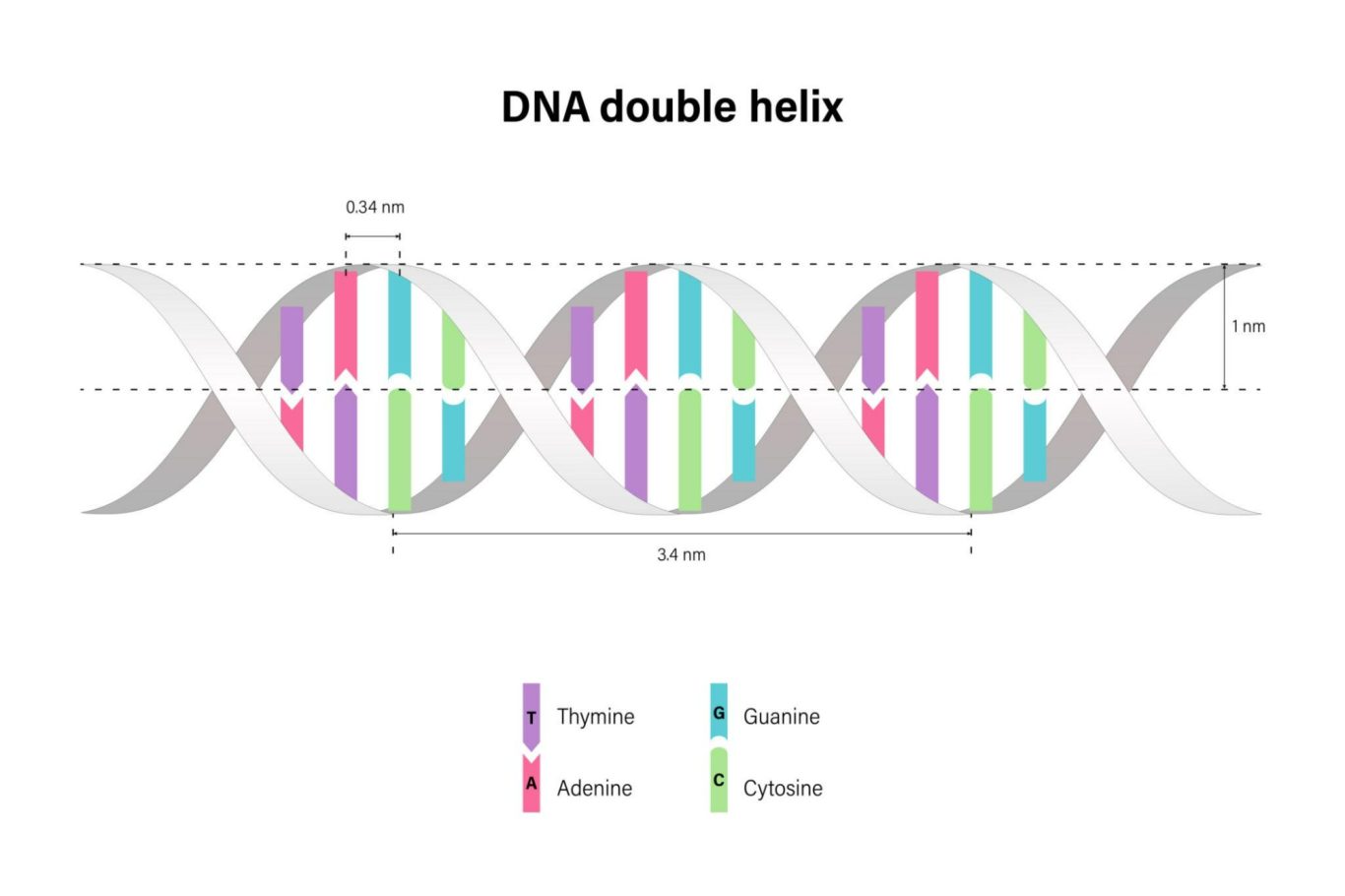
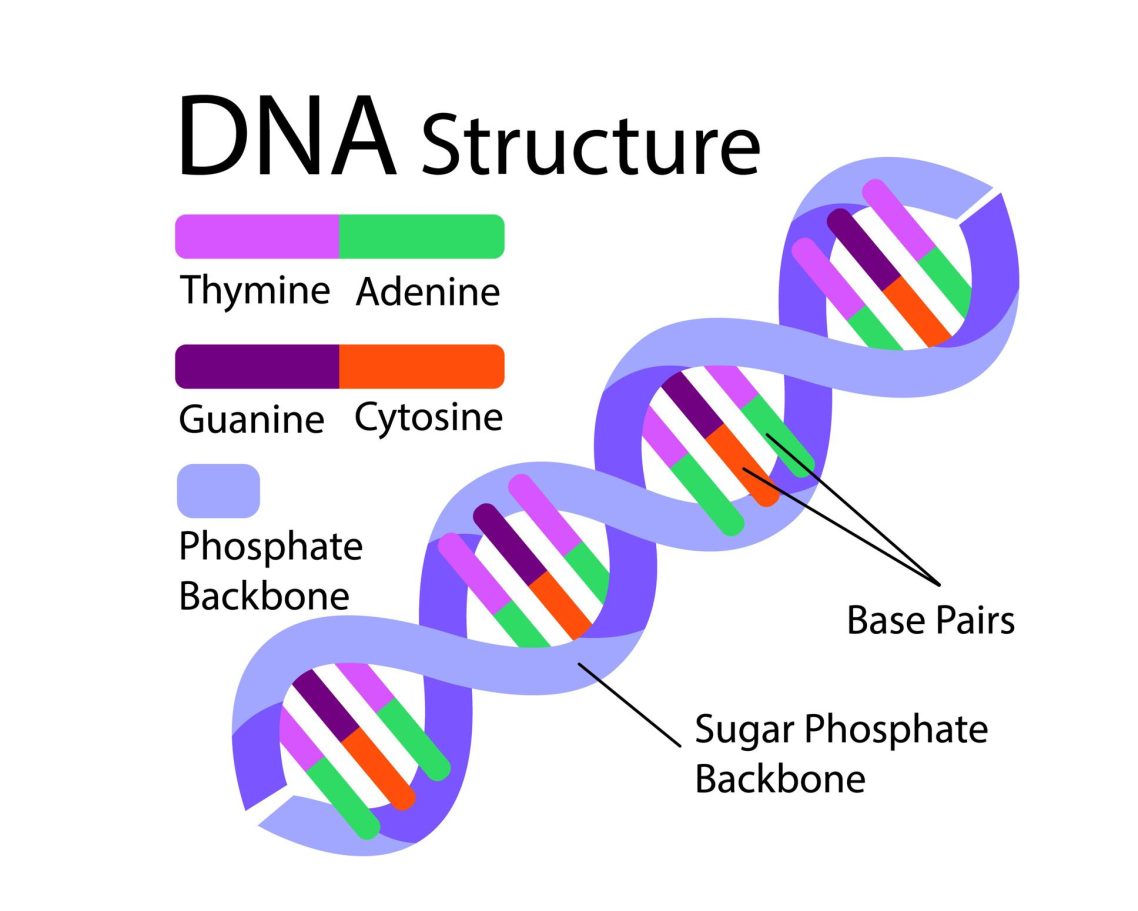
The DNA molecule (in the form of B-DNA, characteristic of living organisms) is a right-handed double helix.
This means:
if you look along the axis of the helix, it twists clockwise — to the right.
A left-handed form also exists (Z-DNA), but:
- it is rare,
- occurs under special conditions,
- and is not the primary form of life.
In other words, the basic genetic structure of life is already asymmetrical.
🧪 Proteins — an even more radical asymmetry
Here it becomes even more striking.
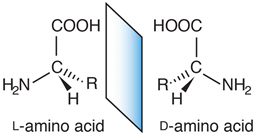
Amino acids (the building blocks of proteins) exist in two mirror forms:
- L-form
- D-form
They are like left and right hands — mirror images, but incompatible.
And here is a remarkable fact:
👉 Almost all living organisms use exclusively L-amino acids.
D-amino acids exist chemically, but life has not systematically adopted them.
This is called the homochirality of life — life has chosen one side.
🔬 Why is this the case?
This is still not fully understood.
There are several hypotheses:
- a slight symmetry breaking at the level of fundamental physical interactions,
- the influence of polarized light in space,
- a random “first choice” that was later stabilized by evolution.
But the fact remains:
Life is not symmetrical.
🌿 Asymmetry as a principle of life
Asymmetry appears not only in molecules:
- the heart is shifted to the left,
- the brain is functionally lateralized (left/right hemispheres),
- shells are usually coiled in one direction,
- even plants often show a preferred direction of growth.
Life is almost never organized in strict mirror symmetry.
🌀 Connection to the model of consciousness
The model of consciousness is also based on the assumption
that the direction of differentiation is innately asymmetrical
(innate are the attitude of consciousness toward the object,
the dominant function, and the auxiliary function).
At the foundation of consciousness lies asymmetry.
If psychological functions were fully symmetrical,
none of them could occupy a privileged position.
In that case:
— there would be no dominant function,
— no stable direction of consciousness,
— every act of perception and judgment would be equally probable in all directions.
But consciousness performs the function of orientation.
Orientation is impossible without preference.
Preference means that one possibility is realized more than others.
That is asymmetry.
Thus, asymmetry in the structure of consciousness functions
is not a consequence, but a condition of the very possibility of consciousness.
Without it, there would be no direction, no stability, no choice.
In this sense, the model of consciousness is based not on balance,
but on structural imbalance.
Without this imbalance, we would have perfect equilibrium symmetry.
And equilibrium symmetry is the absence of movement.