1. Extraversion vs Introversion: What’s the Difference?
2. Psychological functions: perception of invariants (sensation), perception of change (intuition), feeling, thinking
3. Model of Consciousness: Structure, Functions and Types
The structure of consciousness is asymmetrical → learn more: Asymmetry as a fundamental principle of life
Model of Consciousness
Structure of Consciousness and Its Functions
The proposed model of consciousness constitutes a formal reconstruction of C. G. Jung’s typology.
Part of the statements is adopted from his works in unchanged form; another part is introduced as axioms necessary for the logical consistency and structural completeness of the model.
In particular, the model assumes the principle of directed asymmetry of functional differentiation. This principle is not derived directly from Jung’s texts, but is introduced as a fundamental assumption that allows us to explain the dynamics of consciousness, the compensation of attitudes, and the distinction between two functional modes.
Jungian Basic Assumptions
Two Attitudes
Consciousness exists in one of two possible attitudes;
the unconscious attitude is opposed to the conscious one
(if the conscious attitude is extraverted, the unconscious attitude is introverted — and vice versa).
Four Functions
According to Jung, all four functions can be conscious.
We assume that all four functions can also be unconscious.
Oppositions
Thinking and feeling are mutually opposed functions.
Intuition and sensation are mutually opposed functions.
Differentiation = Articulation
A functional element is a distinct, distinguishable part of the content of a function.
A differentiated function is a function whose content consists of elements.
Undifferentiation = Fusion
An undifferentiated function is a function that is fused in its parts and with other functions.
Dominant and Auxiliary Function — Both Conscious
It follows that the dominant and auxiliary functions are either both extraverted or both introverted.
Rational ↔ Irrational
If the dominant function is irrational, the auxiliary function must be rational;
if the dominant function is rational, the auxiliary must be irrational.
Axioms Assumed in Constructing the Model
Spontaneity of the Dominant Function
The elements of the dominant function arise spontaneously, as an autonomous process of consciousness.
Connectivity of Elements
Elements can be directly connected only if one is rational and the other irrational.
An element of the auxiliary function can arise only in connection with an already existing element of the dominant function.
An element of the third function can arise only in connection with an already existing element of the auxiliary function.
Beginning of Element Formation
The beginning of formation of an element is possible only within the conscious attitude.
Since we cannot observe the moment of formation of an element outside consciousness, the model attributes the beginning of its formation to the conscious attitude.
Formation of an Element through Segregation
When an element of a function is formed, the content of the opposite function is segregated simultaneously.
Consciousness as a Consequence of Differentiation
A differentiated function is conscious, regardless of whether its attitude coincides with that of the dominant function.
Principle of Asymmetry of Differentiation
The dominant function retains its differentiation regardless of attitude.
Differentiation of the functions is not distributed symmetrically.
In every type, the auxiliary function is differentiated, whereas its opposite function in the same attitude remains undifferentiated.
This principle is introduced as a fundamental condition for the internal consistency of the model and the direction of its dynamics.
Structure of the Model
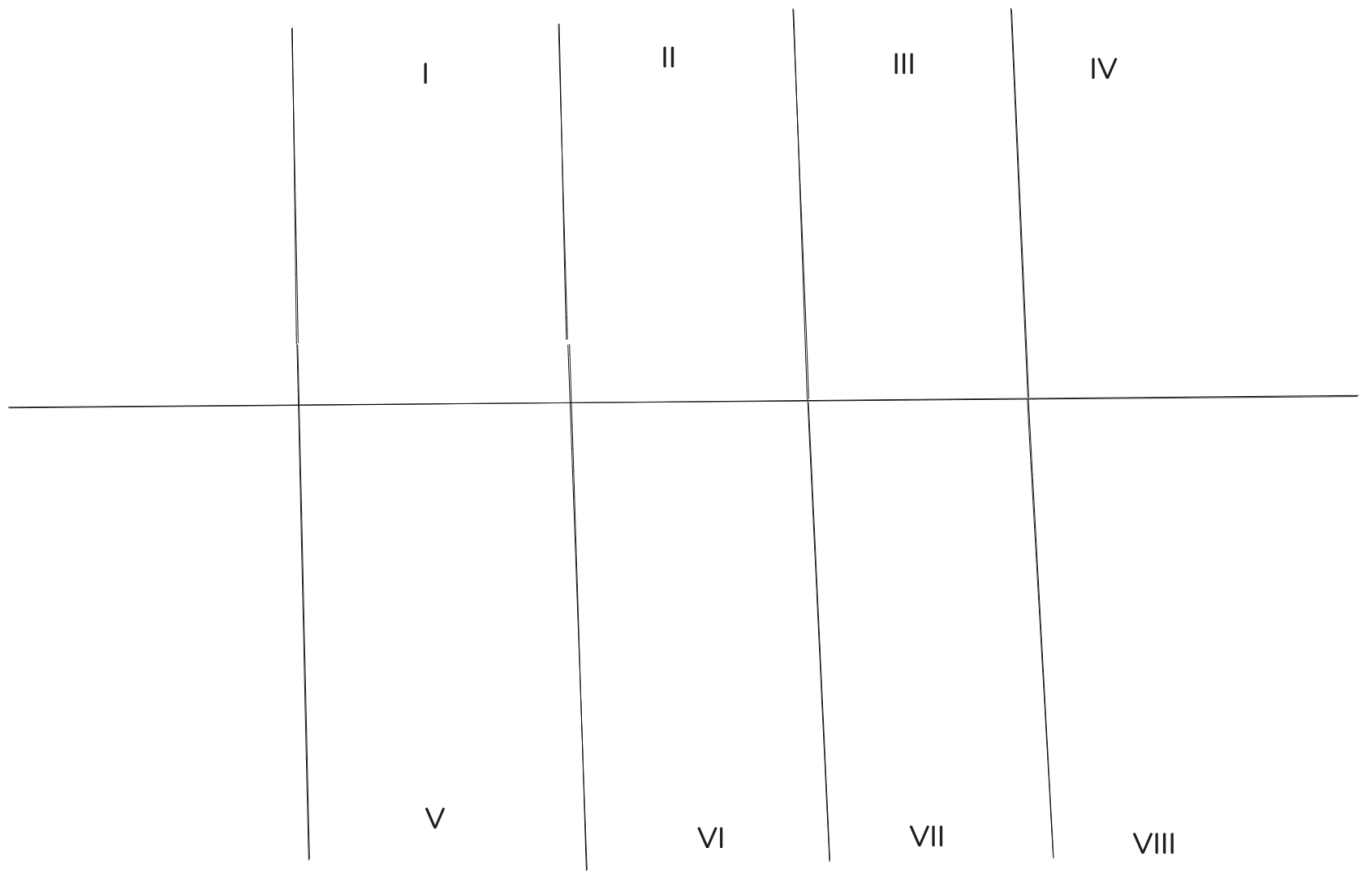
The scheme of the model consists of eight positions.
Positions 1–4: four functions in the conscious attitude.
Positions 5–8: four functions in the unconscious attitude.
1 — dominant function
2 — auxiliary function
3 — function opposed to the dominant function
4 — function opposed to the auxiliary function
5 — function opposed to the dominant function (in unconscious attitude)
6 — function opposed to the auxiliary function (in unconscious attitude)
7 — dominant function in unconscious attitude
8 — auxiliary function in unconscious attitude
Thus, the scheme is fully determined once attitude, dominant function, and auxiliary function are specified. The psychological type is therefore uniquely determined when these are named.
A functional element is represented as a circle.
Undifferentiated functional content is represented as a “cloud”.
Formation of the Functions
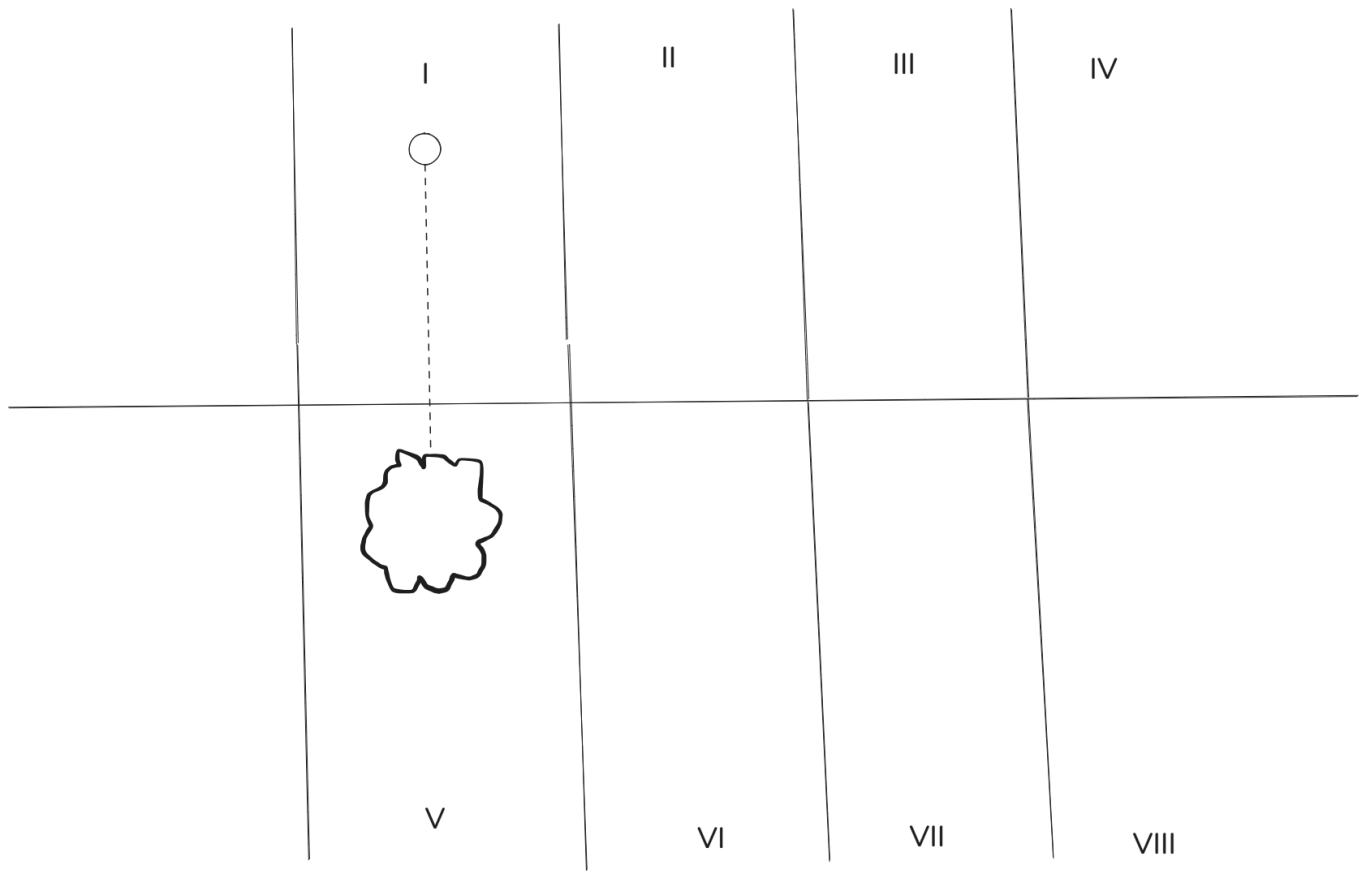
The diagram shows the formation of an element of the dominant function, simultaneously with the formation of the content of the opposite fifth (inferior) function in the unconscious attitude.
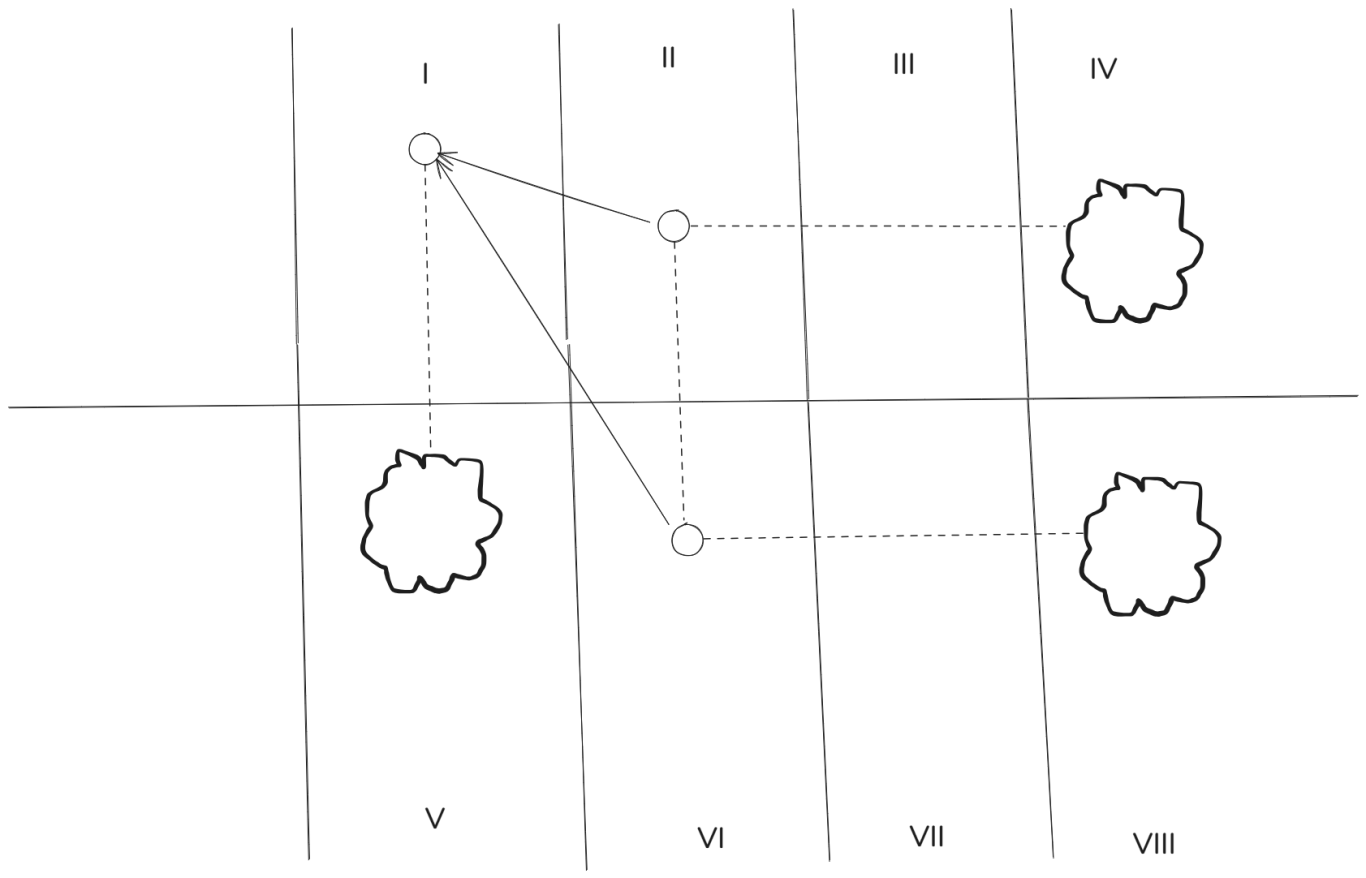
The formation of an element of the second function occurs in connection with an already existing element of the dominant function.
Simultaneously with the second function, the sixth, fourth, and eighth functions also arise. Three processes occur simultaneously and independently:
– segregation of the content of the second and fourth functions from one another;
– segregation of the undifferentiated content of the fourth function from the second;
– segregation of the undifferentiated content of the eighth function from the sixth.
The process of formation of the sixth function takes place in the unconscious. However, since it is formed as a differentiated function, its result becomes conscious.
It is not the process of its formation that becomes conscious, but only the finished result, which appears suddenly and in a single moment. This is experienced as an insight, a sudden realization, or a sudden clear understanding.
The attitude of the sixth function remains opposed to that of the dominant function and therefore the sixth function acts compensatorily.
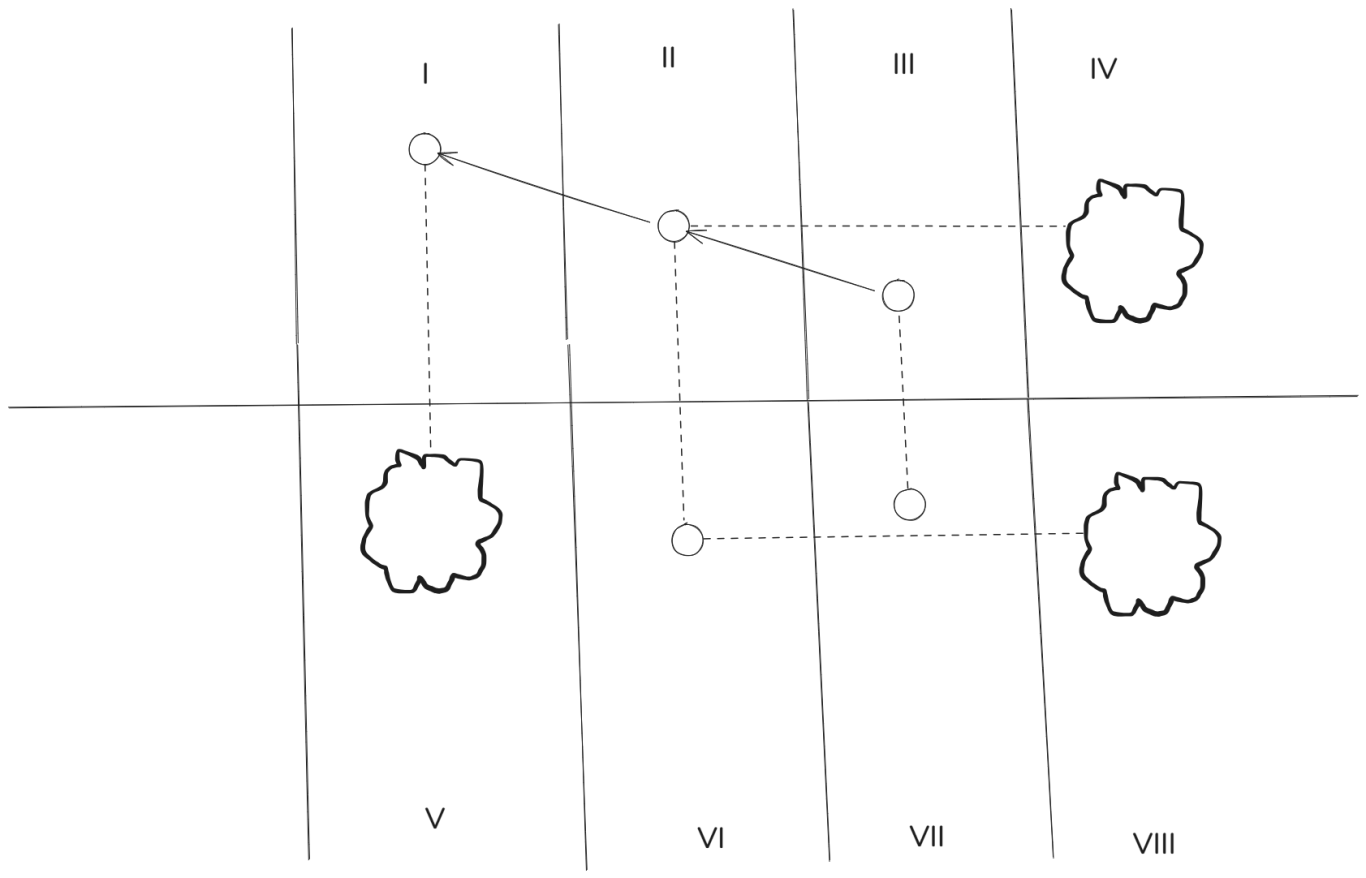
The element of the third function arises only in connection with an already existing element of the auxiliary function.
The third function is opposed to the dominant function, but — unlike the inferior function — it is located in the conscious attitude. With the third function, all four functions are present in consciousness and are differentiated.
When the third function is formed, the content of the seventh function is simultaneously segregated.
The seventh function, like the sixth function, is formed as a differentiated function and therefore becomes conscious.
The process of its formation takes place in the unconscious, and it appears in consciousness just as suddenly and in a single moment — as a finished result — as the sixth function.
The seventh function is the same basic function as the dominant one, but in the opposite attitude. It is experienced as a refinement or correction of the original perception or judgment.
It serves directly as compensation and prevents the one-sidedness of the dominant function.
The Model is Three-Dimensional and Ring-Shaped
The model is three-dimensional and ring-shaped. Therefore, the fourth and eighth functions can be placed to the left of the dominant function in the scheme.
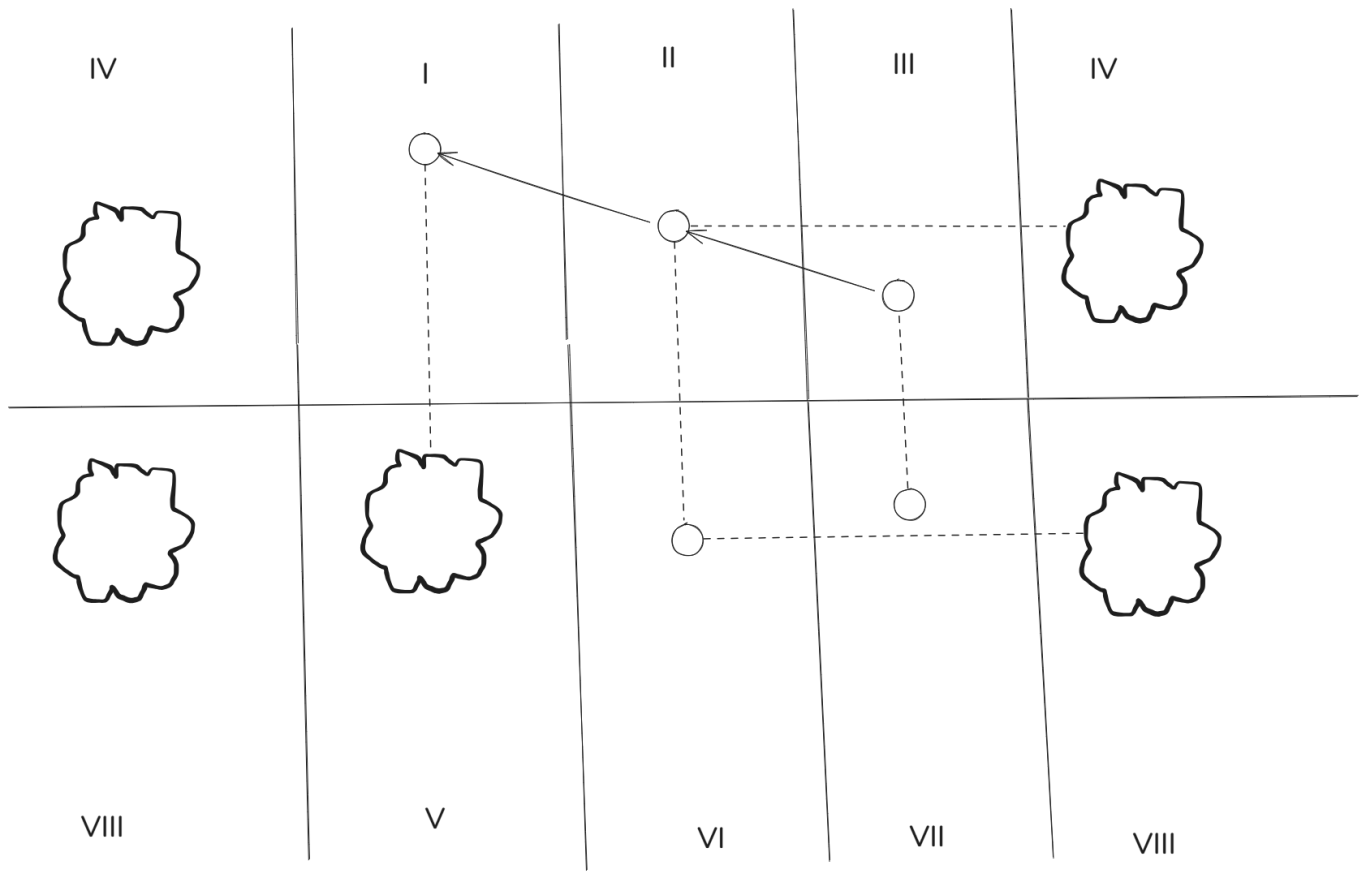
The fourth function is opposed to the second (auxiliary) function and is located in the same attitude as the auxiliary and dominant functions.
Jung also referred to the auxiliary function as the secondary function. In this model, the fourth function — according to its position in the scheme — will be called the left secondary function, and the auxiliary function the right secondary function.
Both secondary functions can — in connection with an already existing element of the dominant function — be activated alternately.
What Happens When the Fourth Function is Activated?
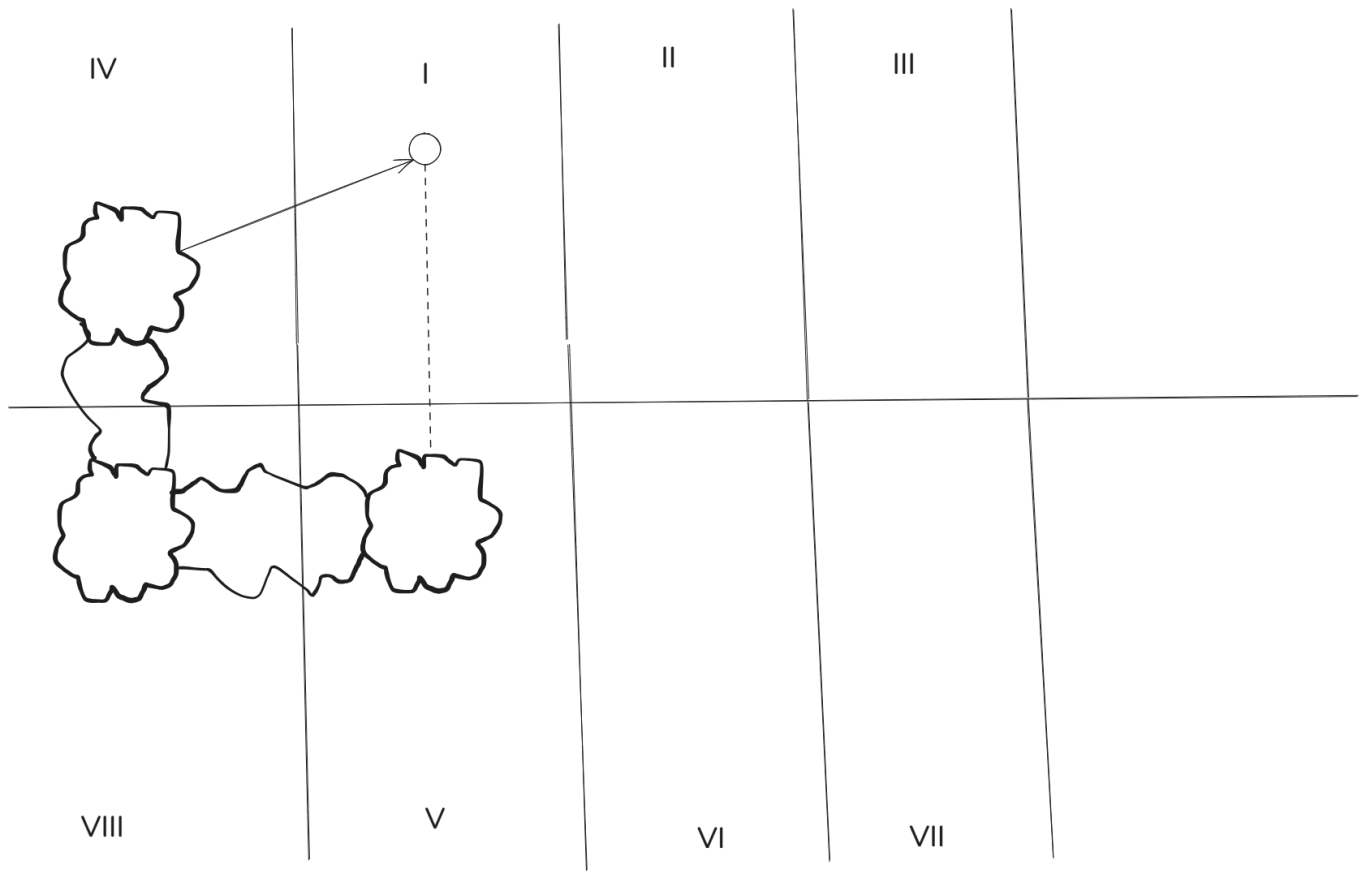
Since it is undifferentiated, it merges with two adjacent, likewise undifferentiated functions — the eighth and the fifth.
Consciousness is then filled with undifferentiated content of the fourth, fifth, and eighth functions.
The only differentiated function in this state is the dominant one.
This is the state of consciousness that Jung described as one-sidedness or imbalance.
Two Alternative Paths of Consciousness
Consciousness can exist only in one of two structural configurations: the left path or the right path.
The following diagram shows two alternative paths of consciousness:
– the left path, when the fourth function is activated;
– the right path, when the second function is activated.
The fourth and second functions cannot be active simultaneously.
If the fourth function is active, the second is inactive;
if the second function is active, the fourth remains inactive.
Activation of either of them implies the activation of the entire configuration of the corresponding path.
The transition between the second and the fourth function occurs in a single moment, not gradually, and is possible at any time in both directions.
The dominant function can operate continuously; however, whenever it operates, one of the secondary functions is active — either the second or the fourth.
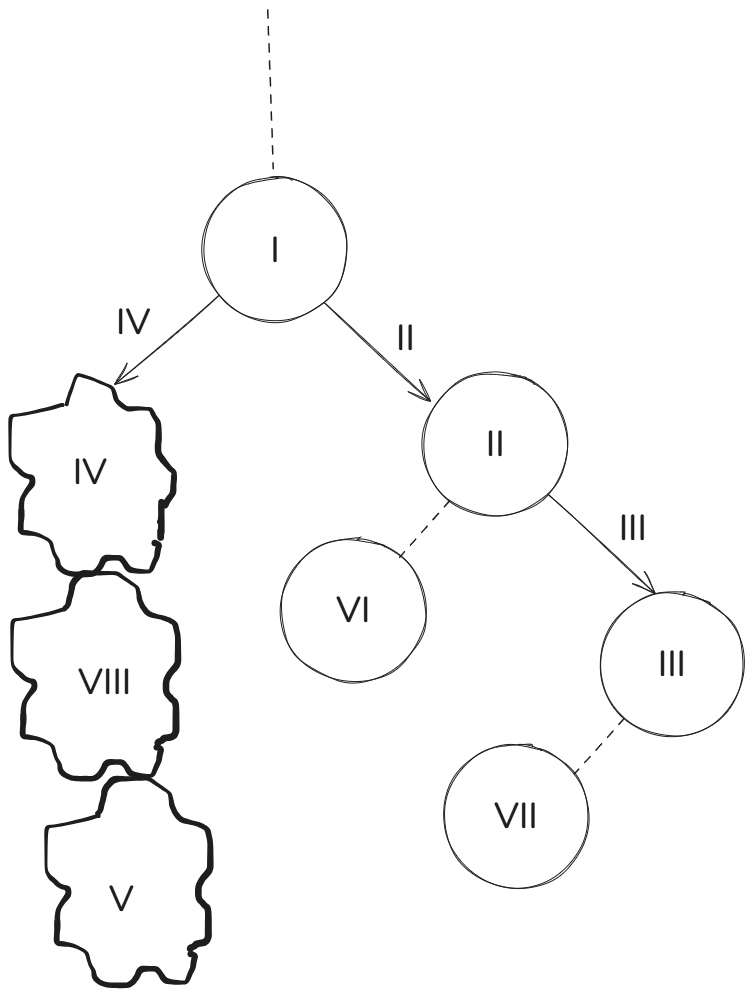
Spontaneous, non-conscious activation of functions is indicated in the diagram by dotted lines; conscious activation by arrows.
Example: Type ITN
The model of consciousness is shown (above) in general form and (below) exemplified for type ITN:
an introvert with dominant thinking (Ti) and auxiliary perception of change (Ni).
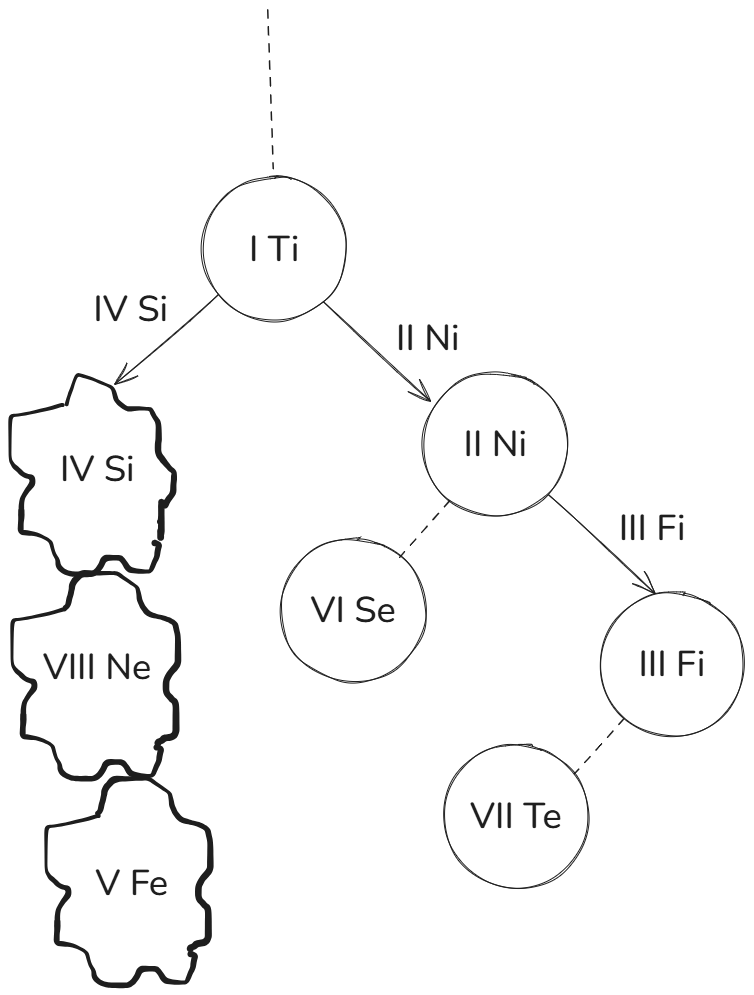
Right Path
All four functions are differentiated and active:
Thinking
– I Ti (dominant function, introverted attitude)
– VII Te (in extraverted attitude)
Intuition
– II Ni (auxiliary function, introverted attitude)
Feeling
– III Fi (third function, introverted attitude)
Sensation
– VI Se (sixth function, extraverted attitude)
Thinking is most strongly differentiated, since it is present in both attitudes.
Left Path
All four functions are active, but only the dominant function is differentiated:
I Ti — differentiated
IV Si — undifferentiated
V Fe — undifferentiated
VIII Ne — undifferentiated
The functions do not disappear. The difference lies not in their number, but in the status of their differentiation and structural connection.