Is Hamlet introverted?
He is often seen as indecisive or overly reflective.
But from a Jungian perspective, a different picture emerges.
Hamlet as an Introverted Type in the Sense of Carl Jung
Hamlet and the problem of the relation to the object
If Hamlet is viewed not as an “indecisive hero” or a “reflective intellectual”, but through Jung’s concept of psychological attitude, one central feature becomes apparent: an abstracting relation to the object and a constant resistance to allowing the external world to acquire determining power over him.
Jung describes the introverted attitude as follows:
The introverted type relates to the object in an abstracting manner; fundamentally, they are always concerned with withdrawing libido from the object, as if they had to guard against an excessive power of the object.
This is precisely how Hamlet behaves in relation to nearly all the objects of the play:
the royal court, his mother, Claudius, Ophelia, social expectations, and even the Ghost of his father.
Distrust of the object
One of Hamlet’s most characteristic traits is his distrust of the object as something self-evident. He does not accept any external demand directly, without resistance to the influence of the object.
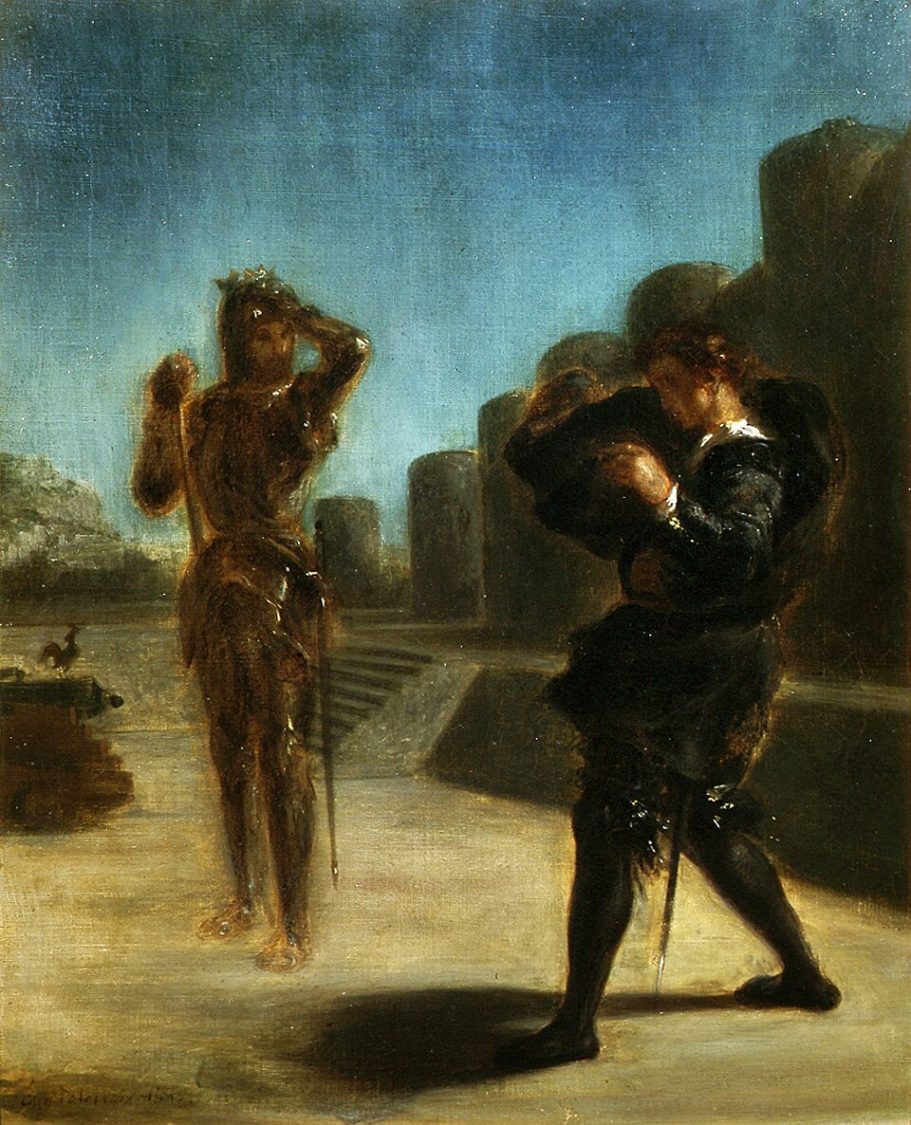
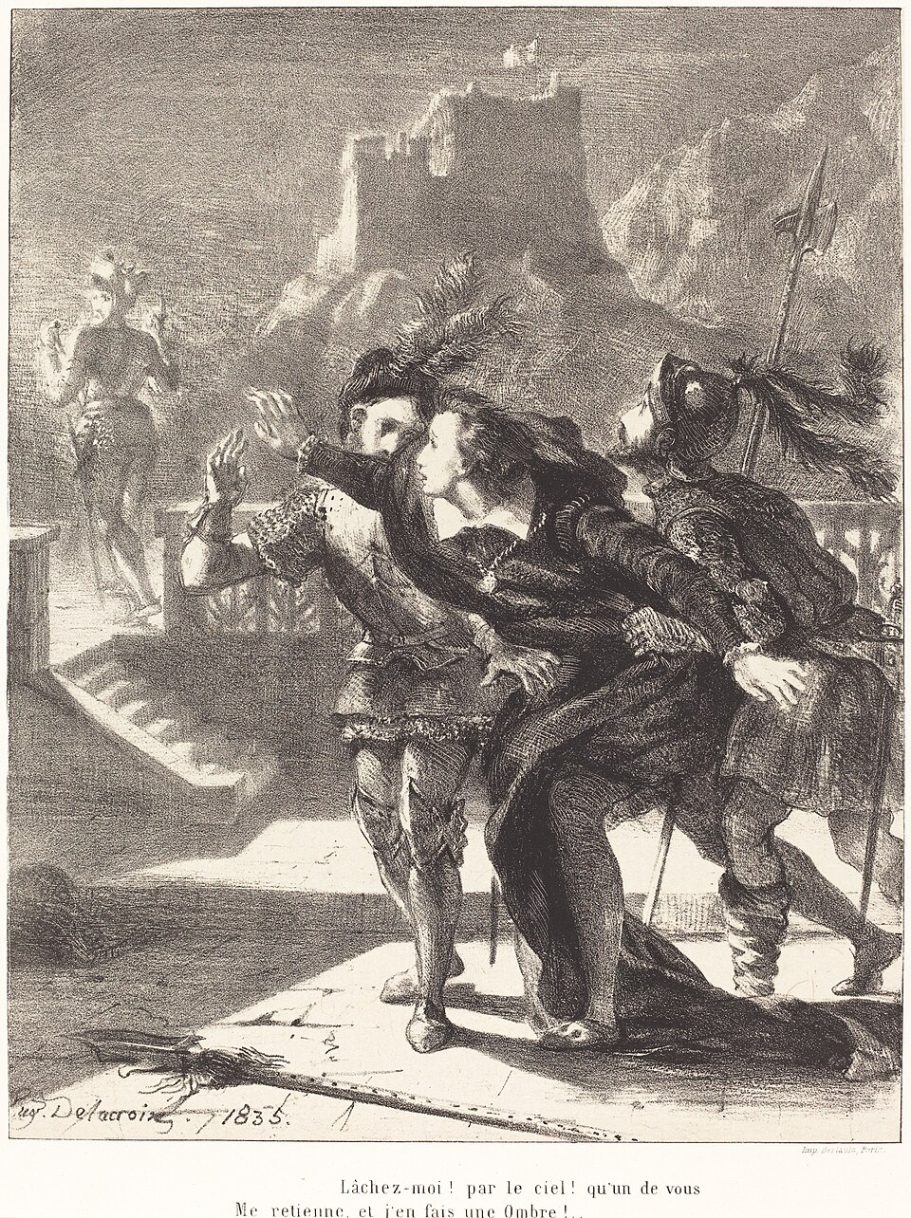
The Ghost of his father is a powerful object demanding action. Yet Hamlet does not submit to it automatically:
Be thou a spirit of health or goblin damned,
Bring with thee airs from heaven or blasts from hell…
He does not allow even this sacred, paternal object to exert determining influence over him. This is a typical introverted gesture: the withdrawal of determining power from the object.
Hamlet and “thinking as a form of defense”
Hamlet constantly translates external events into the realm of reflection. His famous soliloquies are not merely philosophy; they are a form of defense against the power of the object.
The most famous example:
To be, or not to be: that is the question.
Whether ’tis nobler in the mind to suffer
The slings and arrows of outrageous fortune,
Or to take arms against a sea of troubles
And by opposing end them?
Here the object (“outrageous fortune,” the circumstances) and its claim to determining power, experienced as duty, are not accepted as an unconditional command. It is suspended, deprived of immediate authority, and transferred into the field of subjective reflection. This is a classic introverted mechanism.
Relations to others: distance instead of fusion
Hamlet’s introversion is especially evident in his relationships with other characters.
With his mother
Hamlet does not merely accuse Gertrude — he cannot reconcile himself to her unreflective submission to the object, when she yielded to passion and entered into marriage:
O shame! where is thy blush?
For Hamlet, her behavior exemplifies the excessive power of the object over the individual, precisely what he instinctively resists.
With Ophelia
His relationship with Ophelia collapses because of his inability to grant the object (woman, marriage) determining power:
Get thee to a nunnery.
This cruel phrase expresses not hatred, but fear of losing inner autonomy.
Hamlet and the movement of libido
According to Jung, the introverted type is characterized by the fact that libido is not transferred to the object as a source of significance. In Hamlet, this is evident in the way his energy:
- does not translate into action,
- does not attach itself to social roles,
- does not find an outlet in love or power.
Instead, it turns inward, into:
- reflection,
- doubt,
- self-reproach,
- inner conflict.
Hamlet himself recognizes this:
Thus conscience does make cowards of us all;
And thus the native hue of resolution
Is sicklied o’er with the pale cast of thought…
Here Hamlet almost literally formulates the problem of introverted one-sidedness: energy remains within the subject and does not pass into the object.
One-sidedness and compensation
From Jung’s perspective, extreme forms of introversion arise when the conscious attitude becomes excessively dominant, while unconscious compensation fails to find expression.
Hamlet represents precisely such a case. His introverted attitude becomes one-sided, leading to:
- delayed action,
- destroyed relationships,
- inner breakdown.
The final act of the play can be understood as the eruption of compensatory forces: action finally occurs, but in a destructive and tragic form.
If it be now, 'tis not to come; if it be not to come, it will be now; if it be not now, yet it will come: the readiness is all.
This is not calm resolution, but a late and forced compensation.
Conclusion
In the Jungian sense, Hamlet is a typical introverted figure:
- he abstracts from the object,
- refuses to grant it immediate authority,
- retains psychic energy within the subject,
- translates the demands of the world into reflection,
- and suffers from the one-sidedness of his attitude.
Shakespeare portrayed not a “weak hero”, but the tragedy of an introverted attitude, pushed to its extreme in a world that demands action.
That is why Hamlet remains one of the most vivid and recognizable representations of introversion in world literature.